
HOCATT
Ozone Steam
Sauna
The HOCATT Ozone Steam Sauna at LifeShine offers a contained, deeply supportive environment for circulation, release and physiological regulation. The therapy brings together moist heat, transdermal ozone exposure and light therapy in a single session, working with the body’s natural pathways of oxygen use, movement and elimination.
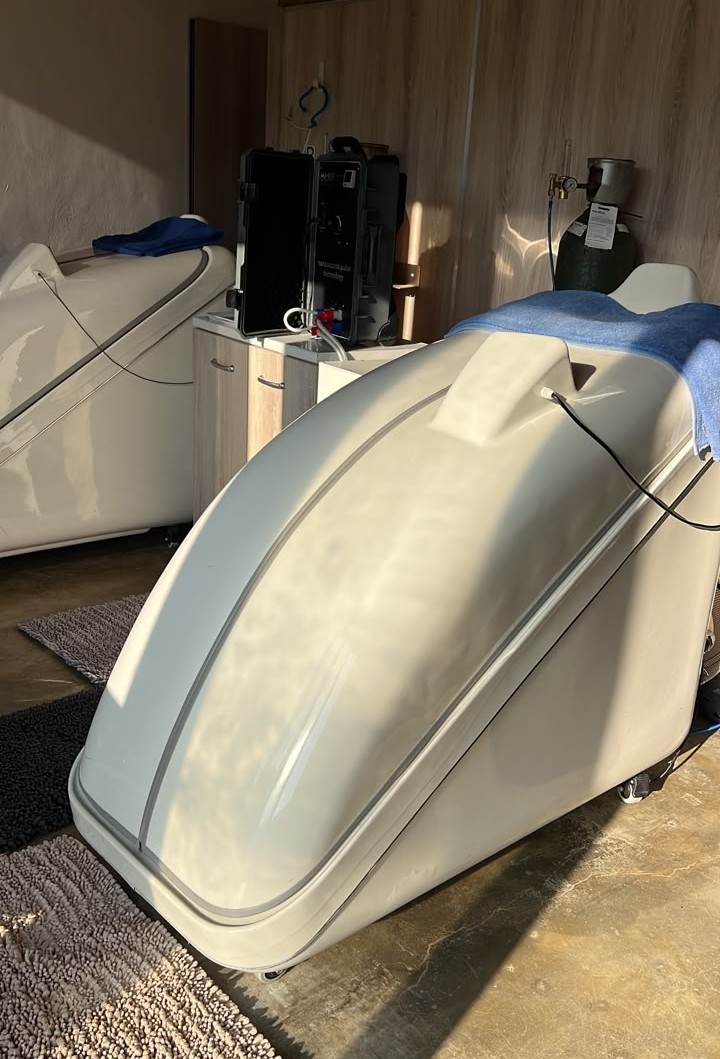
When the body is under sustained physical, emotional or environmental strain, it often shifts into states of holding. Circulation tightens, detoxification slows and tissues remain guarded. HOCATT therapy uses warmth, steam and carefully controlled stimuli to invite the system back toward openness and flow, encouraging the body to let go rather than brace.
At LifeShine, each HOCATT session is approached with intention and care. Before beginning, we take time to understand your history, current state and goals. Sessions are structured to suit your individual tolerance and needs, with exposure levels adjusted carefully. A typical session lasts approximately 30 minutes and may be used as a once-off support or as part of a broader therapeutic programme.
Clients often turn to HOCATT sauna therapy when seeking support for circulation challenges, accumulated tension, sluggish detoxification, inflammatory load or general systemic congestion. Many report a sense of lightness, ease of movement, improved warmth in the body, clearer breathing and a deep state of relaxation following sessions. Over time, some notice improved resilience and a greater capacity to release physical and nervous system stress.
HOCATT sauna therapy at LifeShine is offered with the same emphasis on safety, respect and individualisation that defines all our therapies. Ozone exposure is applied conservatively and only where appropriate. We guide each session with sensitivity to your constitution and responses. Through this therapy, we aim to support the body’s innate capacity for circulation, balance and release within a calm, contained and restorative space.
Current research into ozone sauna therapy, including HOCATT-style systems, suggests that the combined exposure to heat and controlled transdermal ozone may influence circulation, inflammatory signalling and the body’s own antioxidant responses.
What the science says
Small clinical series have observed reductions in pain scores and changes in inflammatory markers following ozone sauna use. While these early studies involve limited participant numbers, they point toward a consistent physiological pattern rather than isolated effects. The body appears to respond to low-dose ozone exposure by activating protective antioxidant pathways and improving local blood flow, processes linked to tissue repair and metabolic regulation.
Review literature examining ozone sauna therapy, sometimes in combination with pulsed electromagnetic fields, describes emerging signals in areas such as pain modulation, tissue oxygen utilisation and reproductive health markers. These findings remain exploratory, but they suggest that when applied conservatively, ozone sauna exposure may act as a systemic stimulus rather than a single-target intervention.
Mechanistic reviews help clarify how this may occur. Controlled ozone exposure creates a brief oxidative challenge that encourages the body to strengthen its own antioxidant defences. This response is associated with improved microcirculation and shifts in inflammatory balance, offering a plausible explanation for the clinical effects reported.
Broader sauna research, although not ozone-specific, adds important context. Large observational studies link regular heat exposure with improved cardiovascular markers and reduced all-cause mortality. These findings support the role of heat-induced circulation, vascular flexibility and stress adaptation as meaningful contributors to long-term physiological resilience.
Taken together, the research suggests that HOCATT therapy works not through force, but through measured stimulation. Heat, ozone and light act as signals that invite the body to respond, regulate and release, rather than overriding its natural processes.
Z. Merhi et al., Ozone Sauna Therapy (HOCATT)
Small clinical series and mechanistic discussion showing reduced pain scores in a pilot group and exploring inflammatory marker changes. This is an early clinical report that points to plausible effects but is limited by small sample sizes.
A. R. Dias et al., Ozone Sauna Therapy and PEMF
A 2023 review summarising animal and human studies showing possible benefits of OST plus PEMF in reproductive and pain contexts and calling for larger trials. Useful for understanding the current clinical signal and gaps.
H. Ramadan et al., OST + PEMF and semen/fertility signals
Preliminary data suggesting OST plus PEMF delivered by HOCATT may influence semen parameters and IVF outcomes. Early and hypothesis-generating rather than definitive.
N. L. Smith et al., Ozone therapy: overview of mechanisms
A widely cited review describing how controlled ozone exposure can induce mild oxidative signalling that upregulates antioxidant responses and affects local perfusion. Serves as a mechanistic backbone for understanding ozone’s proposed effects.
T. Laukkanen et al., Observational studies of sauna bathing and cardiovascular outcomes
Larger population studies and narrative reviews linking regular sauna use to improved cardiovascular markers and reduced all-cause and cardiac mortality; these studies support the idea that repeated heat exposure can be cardioprotective, though they are not specific to ozone saunas.
