
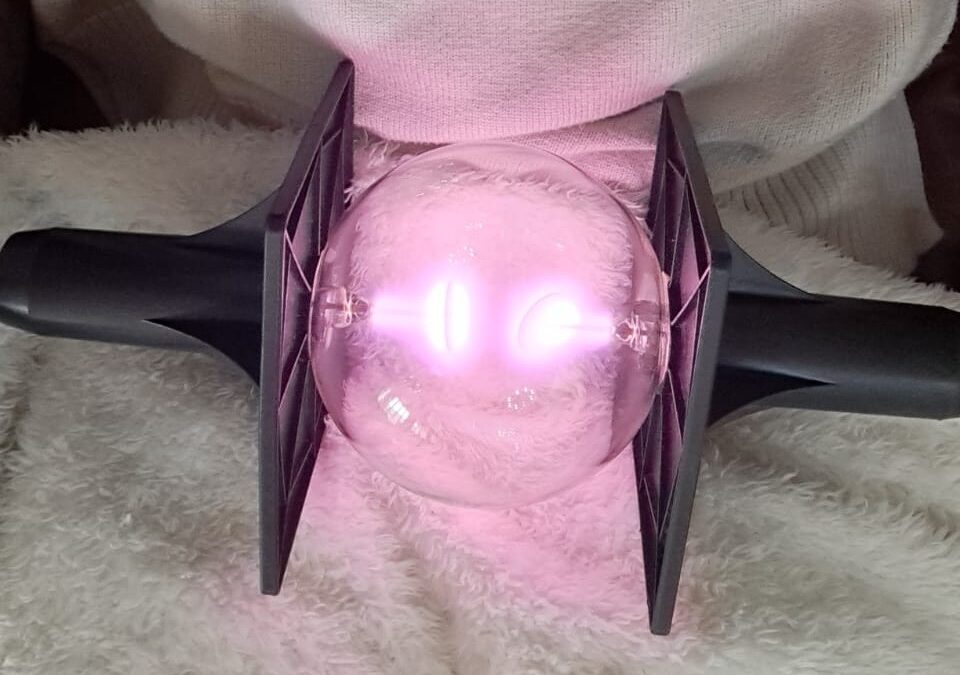

Every doctor’s life has defining moments. For Dr Oliver Macleod-Smith, one of those moments came not in a consulting room, but within his own family.
The Doctor who asked one more question
When his brother was diagnosed with advanced brain cancer, medicine suddenly became deeply personal. Like any brother, he wanted to help. Like any doctor, he searched for every possible avenue that might offer hope. During that search, he encountered RIFE technology. A machine was purchased locally, but despite the promise surrounding it, it made no meaningful difference to his brother’s condition.
For many people, that would have been the end of the story.
For Dr Oliver, it became the beginning of a much bigger question.
Why did RIFE machines appear to help some people with relatively minor health concerns, yet seem to have little effect in more serious conditions such as cancer and autoimmune disease? Was the technology itself flawed, or had something been lost along the way?
Rather than accepting assumptions, Dr Oliver did what he had been trained to do. He began to investigate.
A game changer
Sometimes, one question has the power to change not only a career, but the lives of countless others.
Following a forgotten trail
His search led him back to the work of Dr Royal Raymond Rife.
The deeper he looked, the more remarkable the story became. Rife was not simply an inventor with an unconventional idea. He was a microbiologist, optical technician, machinist and engineer who worked alongside respected physicians and researchers during the early twentieth century before his work gradually disappeared from mainstream medicine.
Yet something still didn’t add up.
There were hundreds of devices being marketed as “RIFE” machines around the world, but very little evidence that they actually reproduced the technology Rife had originally developed. The more Dr Oliver studied the historical records, the clearer it became that much of the original knowledge had been lost, altered or misunderstood over time.
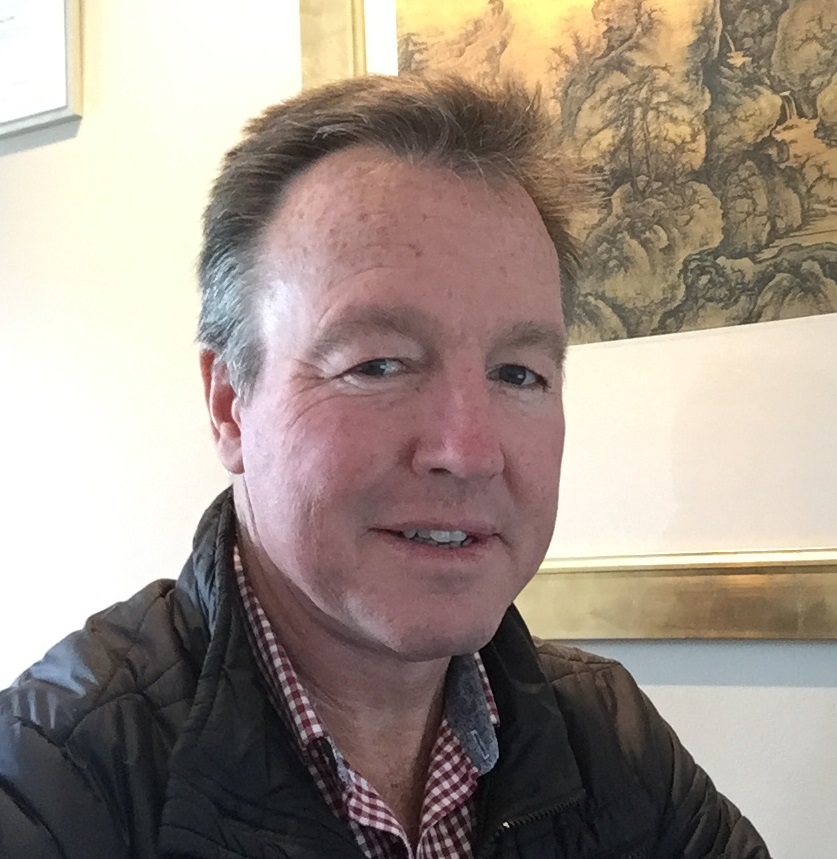
His search eventually led him to an international research group that had spent more than two decades locating, restoring and reverse engineering one of the few surviving original RIFE machines. For the first time in generations, researchers were able to measure exactly what the original machine produced.
For Dr Oliver, everything changed.
“This was a game changer as this group actually got hold of an original Rife machine from the 30’s. It is thanks to them that we now know what came out of an original machine and we owe them a debt of gratitude. What became clear is that almost all so called ‘Rife’ machines out there simply do NOT do what Rife was originally doing. I had to learn how to use Spectrum analysers and Oscilloscopes. Without using and understanding these electronic measuring devices one simply has no clue what is coming out of all of these machines. In short all of these ‘Rife’ machines are far too weak, the frequencies are far too low and the wave shape is nothing like what Rife was originally doing. Importantly my clinical experiences are matching more and more what doctors at the time were reporting after using Dr Rife’s original machines.”
Building rather than buying
Most people would have accepted what was commercially available.
Dr Oliver chose a different path.
Armed with his medical training and driven by a deeply personal experience, he immersed himself in the science, the engineering and the painstaking process of recreating the original technology as faithfully as possible. Every component was measured. Every signal was analysed. Every design decision was guided by historical evidence rather than assumption.
Years of research, testing and refinement ultimately led to the development of South Africa’s original authentic RIFE technology.
What this means for patients today
Today, Dr Oliver brings together two perspectives that continue to shape his work: the analytical thinking of a medical doctor and the lived experience of someone who knows what it feels like when a loved one runs out of options.
Qualified with an MBBCh from the University of the Witwatersrand and registered with the Health Professions Council of South Africa, he remains grounded in conventional medical practice while exploring carefully researched integrative approaches to long-term health and chronic conditions.
For him, technology has never been the destination. People are.
Every patient who walks through his door brings a unique story, unique challenges and unique hopes. His commitment is to keep asking thoughtful questions, to remain open to learning, and to offer care that is both scientifically curious and deeply compassionate.
Because sometimes, one question has the power to change not only a career, but the lives of countless others.
