

This article is intended to help you understand what Rife technology actually is, how it is meant to work, and why there is such a wide gap between the original Rife system and most devices sold under that name today. It also explains why, at LifeShine, we use only machinery that replicates the original Rife system.
The purpose of this article is to make the science behind this modality understandable without oversimplifying it, and to show clearly why most so-called Rife machines do not produce meaningful or reliable results.
There are now hundreds of devices sold under the name “Rife machine”. The overwhelming majority bear little resemblance, electrically or functionally, to what Dr Royal Raymond Rife actually built and used. This is not a matter of opinion or branding. It is a matter of physics, engineering and measurement.
Rife’s results were achieved with a very specific combination of frequency behaviour, wave structure and power delivery. His own writings repeatedly emphasise that deviation from these parameters renders the technology ineffective. The implication is unavoidable: if a machine does not reproduce what an original Rife machine actually outputs, it cannot reasonably be expected to reproduce Rife’s results, particularly in chronic and complex conditions.
This conclusion is reinforced by a single critical historical fact.
Only one group, documented at www.rifevideos.com, has ever had prolonged access to an original, working Rife machine. Over more than two decades they repaired it, studied it, and measured its output using spectrum analysers and oscilloscopes. Everything else on the market is, by definition, reverse‑engineering without a reference point, or outright speculation.
The consequence is stark.
Machines that do not reproduce the same signal patterns, frequency sweep behaviour and power levels are not “less effective versions” of Rife technology. They are different technologies altogether.
Rife’s scientific foundation and credibility
Dr Royal Raymond Rife was not an outsider to science or medicine. He was a trained microbiologist, an accomplished machinist, an optical specialist who worked with Zeiss, and a former naval officer with grounding in radio frequency principles. He designed and built his own microscopes because none available could do what he required.
Working with mainstream physicians and academics, including Dr Milbank Johnson and Professor Arthur Kendall, Rife conducted formal clinical work in the 1930s. His research was well funded, including backing from industrialist Henry Timken. At that stage, Rife was very much part of the medical establishment.
His work disappeared not because it failed, but because its implications were disruptive. By the late 1940s and 1950s, doctors were threatened with loss of licence or imprisonment if they continued using the technology. The machines vanished, the microscopes were lost, and the work was effectively buried.
The Central Principle: Resonance
Rife’s work is based on resonance. This is the same physical principle by which a precisely matched sound frequency can shatter a glass. Every structure has resonant characteristics. Rife demonstrated that microorganisms are no exception.
Using his specialised microscope, Rife observed live viruses directly, something still not achievable with modern electron microscopy, which only images dead material. By isolating, culturing and inoculating pathogens repeatedly, he demonstrated that specific organisms could be devitalised when exposed to specific radio frequencies.
Crucially, he did not guess these frequencies. He observed the destruction of the organism in real time and recorded the exact frequency at which it occurred.
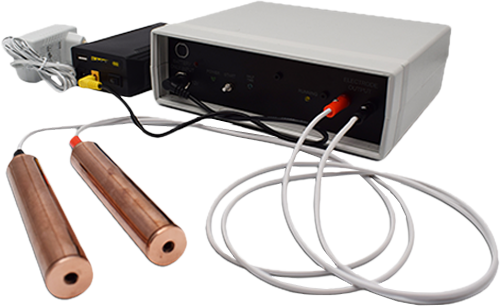
Cancer as a Viral Process in Rife Therapy
At the center of LifeShine’s Rife‑based cancer protocols is one defining premise drawn directly from Rife’s work: the primary therapeutic target is not the cancer cell itself, but the virus residing within it.
Rife identified and named two cancer‑associated viruses, which he referred to as BX and BY. Through repeated laboratory work, he demonstrated that these viruses were present within cancer cells and were sensitive to specific resonant frequencies.
In Rife therapy, the intent is therefore not to poison, burn or mechanically destroy cancer cells. The intent is to devitalise the cancer virus. Once the viral driver is removed, the cancer cell undergoes apoptosis, or programmed cell death. This is a slower process than direct cell killing, but it is inherently less destructive to surrounding tissue.
This distinction underpins the entire protocol. If the virus is not addressed, killing cancer cells alone leaves the underlying cause untouched. If the virus is neutralised, the pathological process collapses from within.
Why Replication must be exact
Rife repeatedly stated that accuracy was non‑negotiable. His technology only worked when three critical factors were present simultaneously:
-
-
- A specific high‑frequency carrier with a defined bandwidth
- A very particular interrupted waveform, known as the Hoyland wave
- Sufficient power to penetrate all tissues, including bone
-
Modern analysis of an original Rife machine shows:
-
-
- A frequency sweep centred in the 2–4 MHz range
- A complex spectrum with a carrier wave and multiple sideband harmonics generated simultaneously
- An interrupted, gated waveform visible on an oscilloscope
- Power levels high enough to reach deep and resistant tissues
-
Machines that operate at audio frequencies, rely on preset programmes, cause muscle contractions, or lack adequate power are not reproducing this behaviour. In such cases, the signal is either physiologically perceptible, electrically inadequate, or both. The result is stimulation at best, not devitalisation.
This is why partial replication fails. One cannot remove or soften any of these elements without collapsing the therapeutic mechanism.
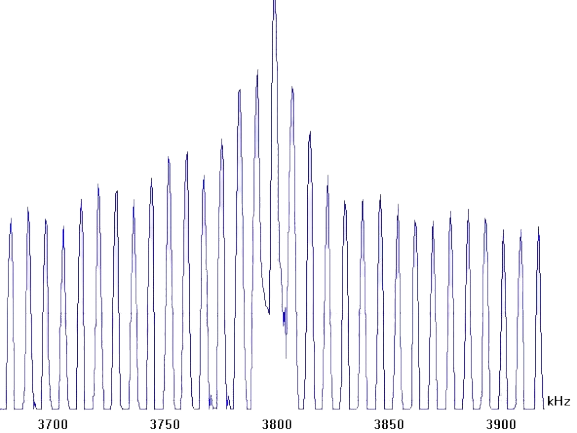
SPECTRUM ANALYSER PATTERN: Clearly showing the central high frequency carrier wave with multiple ‘side-band’ frequencies generated simultaneously.
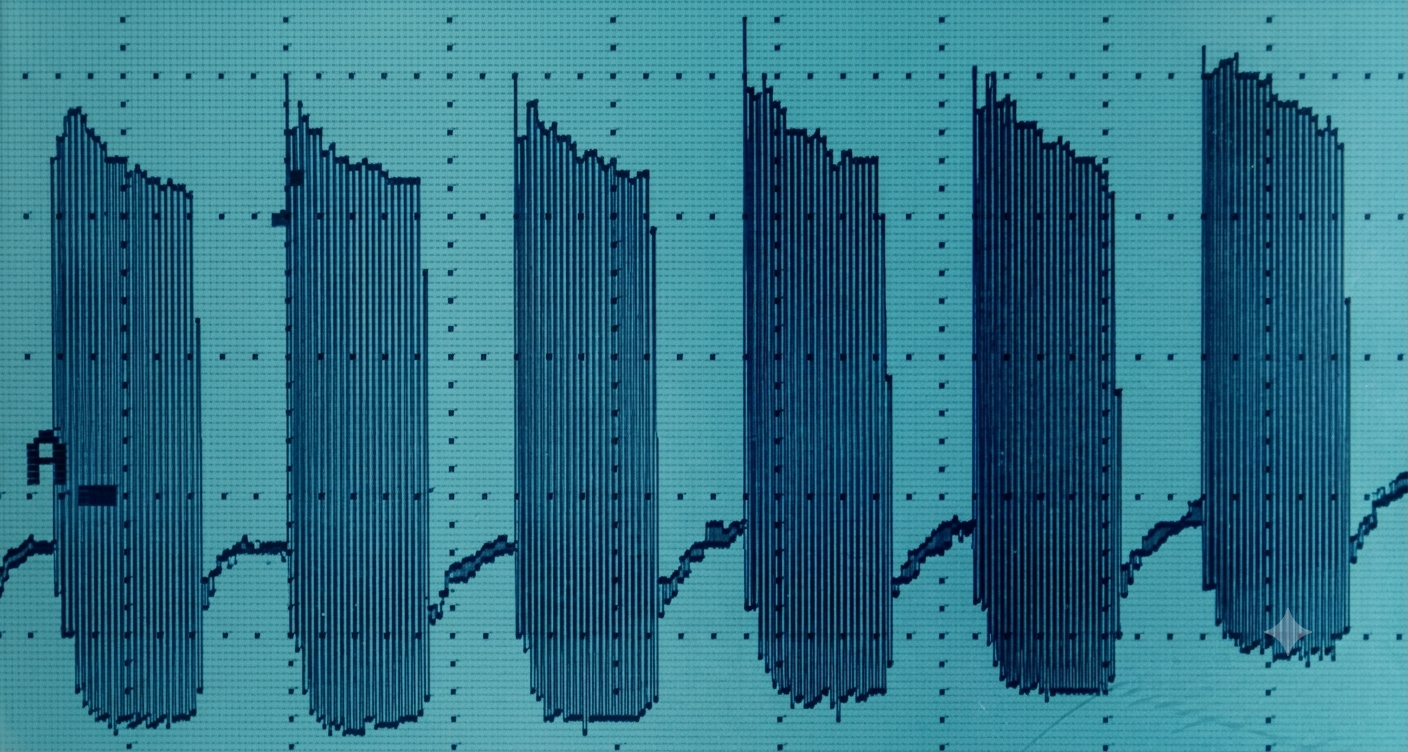
OSCILLOSCOPE PATTERN: Clearly showing an interrupted (aka gated) wave looking like a square wave which is in fact known as a ‘Hoyland’ wave, named after Rife’s engineer, Philip Hoyland.
The Sweep: Why One Protocol covers many conditions
One of Rife’s most important discoveries came through his collaboration with engineer Philip Hoyland. By modulating low audio frequencies onto a high‑frequency carrier, they generated multiple harmonic sidebands. This allowed the machine to sweep through a vast range of biologically active frequencies in a very short time.
The practical outcome was profound. Instead of targeting one organism at a time, the machine could expose all relevant pathogens to their resonant frequencies within a single 20‑minute session. Mathematical modelling shows that each frequency is effectively hit for several minutes during a session.
This is why the same sweep protocol is used across different conditions, including cancer, chronic infections and autoimmune presentations. The machine does not need multiple programmes. It needs fidelity to the original sweep.
Power, Physiology and Penetration
Human tissue has varying electrical conductivity. Fluids and muscle conduct well. Bone does not. Early experience showed that insufficient power could produce improvements in soft tissue disease while leaving bony metastases untouched. Once adequate power levels were achieved, this limitation disappeared. The conclusion was clear: without sufficient power, one risks irritating the pathogen rather than destroying it. Importantly, frequencies in the megahertz range are well above the threshold of human nerve and muscle depolarisation. Correct Rife frequencies are therefore not felt by the body. Sensation, spasms or tingling are indicators that the machine is operating in the wrong frequency range.
Oncology and Rife: A fundamental difference in approach
Conventional oncology aims to kill cancer cells directly, typically through chemical toxicity or ionising radiation. While this can shrink tumours, it does not target the cancer virus described by Rife. Radiation, in particular, is documented as increasing viral virulence under certain conditions.
Rife therapy takes the opposite approach. It targets the viral component, allowing the cancer cells to die naturally through apoptosis. This process is slower, but it avoids the systemic toxicity associated with cell‑killing strategies.
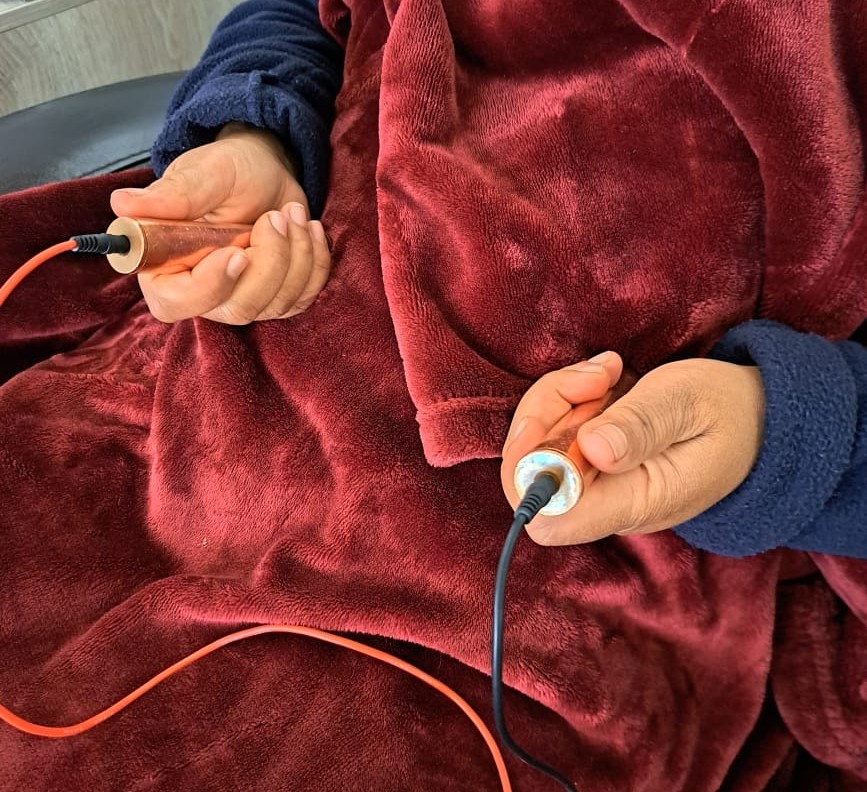
LIFESHINE HANDHELD RIFE BARS: conductive handheld electrodes used to deliver frequency throughout the body.
This distinction also explains relapse patterns observed after apparent remission. If the viral driver remains, the disease process is not resolved.
Inflammation, Detoxification and Clinical Reality
Any form of tissue death, whether through oncology or apoptosis, can produce inflammation and swelling. This is a normal physiological response. Supportive care, including hydration and inflammation management, is therefore an integral part of responsible use of this technology.
Transient detoxification symptoms may occur as pathogens are devitalised and cleared. These are typically temporary and followed by a sense of improved wellbeing.
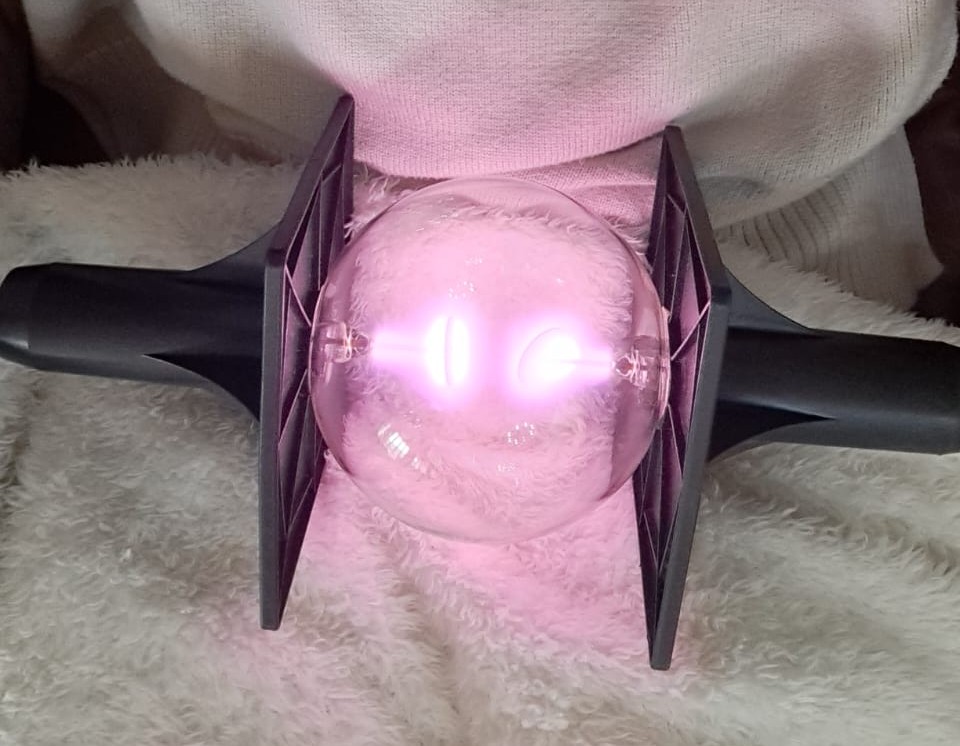
LIFESHINE RIFE BALL: a handheld applicator used to deliver frequencies to a specific area of the body.
The effectiveness of Rife therapy does not rest on belief, branding or modern reinterpretation. It rests on whether the technology being used actually reproduces what Rife built and measured.
When it does, the logic of the therapy is internally consistent: identify the pathogen, apply the correct resonant frequencies with sufficient power, and allow the body to complete the process through its own regulatory mechanisms. Anything less than this is not Rife therapy in any meaningful sense. – Dr Oliver Macleod-Smith
About the RifeVideos research archive
The website www.rifevideos.com forms the backbone of the historical and technical reconstruction of original Rife technology. It documents the recovery of an original machine, its measurement, and the historical records of physicians who used it.
Because this material is extensive, it is not repeated here. Instead, it should be regarded as a reference archive supporting the principles outlined in this article. Any additional material drawn from that site should be treated as supplementary reading rather than required understanding.
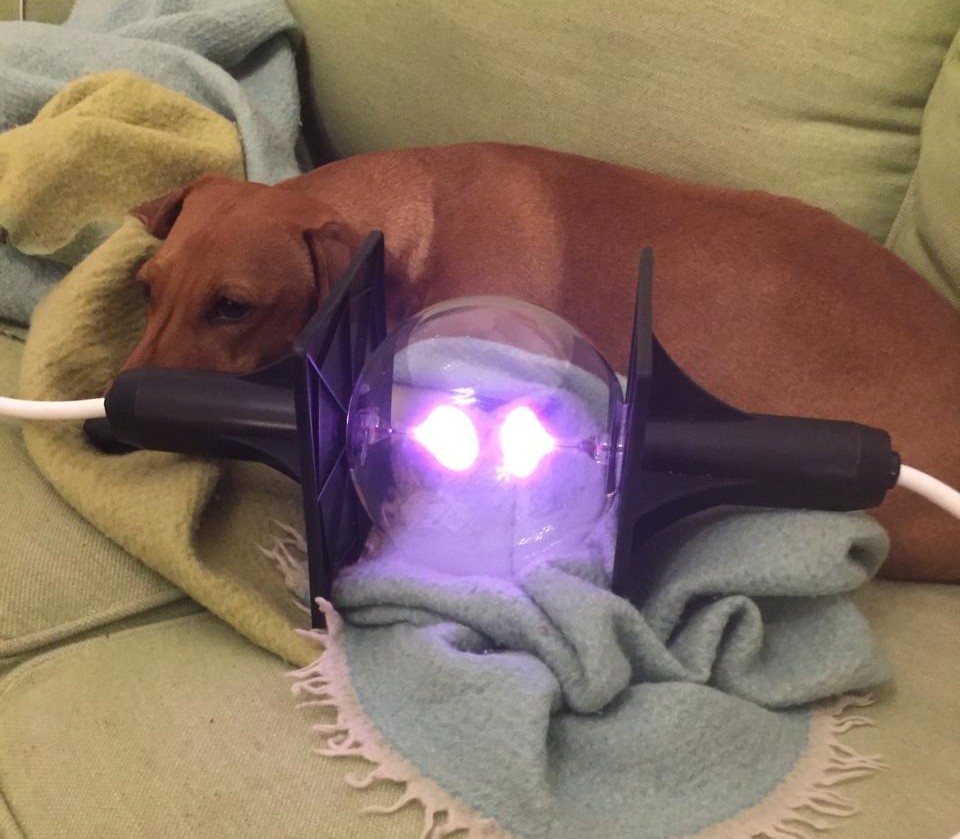
Dr Oliver’s dog clearly knows a good thing when he feels it. This gentle, non-invasive frequency therapy can be used with animals too, making it a versatile addition to a holistic approach to wellbeing.